Smoking Gun Email Links Hillary Clinton Directly to ‘Russiagate’ Hoax

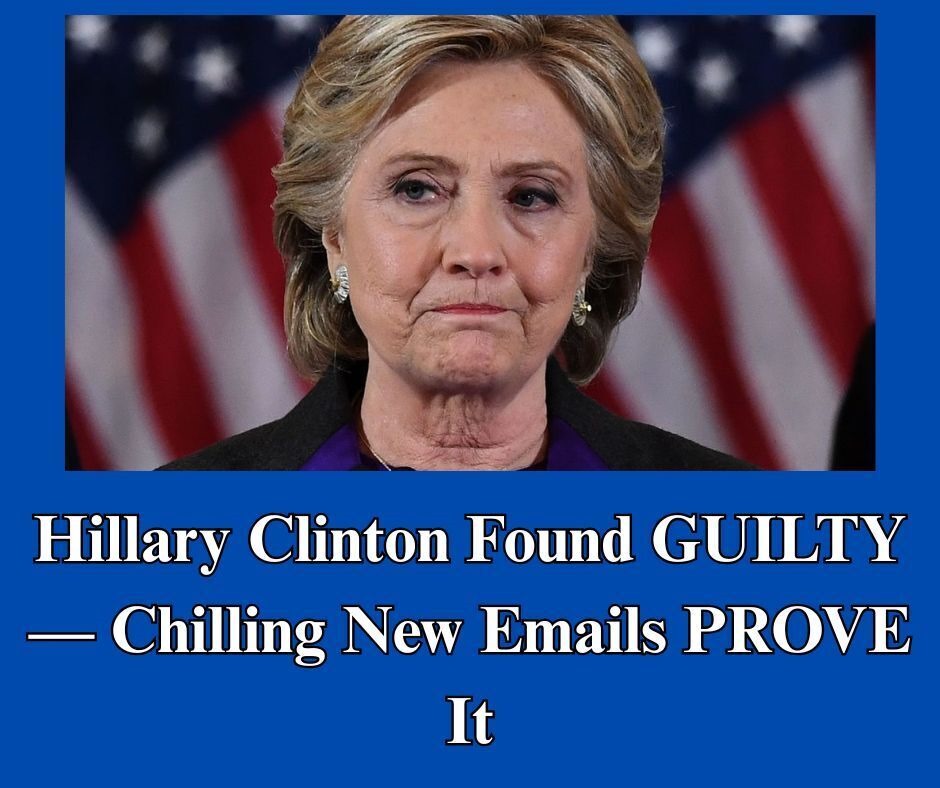
A recently declassified appendix to the Durham report purportedly indicates that Hillary Clinton sanctioned the initiative to advance the Trump-Russia collusion narrative—subsequently misleading the FBI regarding her participation.
Senate Judiciary Chairman Chuck Grassley unveiled the declassified document on Thursday, which is included in Special Counsel John Durham’s 2023 report. This report corroborated assertions made by President Donald Trump and his associates that the FBI acted inappropriately when it initiated its investigation into Trump’s 2016 campaign concerning alleged connections to Russia, as reported by The Federalist.
The newly declassified document includes two Russian intelligence memos that allegedly outline former President Obama’s involvement in what has been termed the Trump-Russia collusion hoax, in addition to private communications among members of Hillary Clinton’s campaign.
In June 2016, the Democratic National Committee acknowledged that its servers had been compromised, reportedly by Russian military intelligence. Among the data that hackers allegedly accessed were internal emails, as the outlet further reported.
In a version of an email dated July 25, 2016, Leonard Benardo of George Soros’ Open Society Foundations purportedly stated that the hacking narrative was crucial and that “politicization is on the table.” He also allegedly indicated that Julianne Smith, who was then Clinton’s foreign policy adviser, was formulating a strategy to “demonize Putin and Trump.”
“Currently, it is beneficial for a post-convention resurgence,” Benardo stated, adding, “Subsequently, the FBI will exacerbate the situation.” Two days later, Benardo allegedly mentioned in a follow-up email that Clinton sanctioned an “idea regarding Trump and Russian hackers undermining U.S. elections.”
“This should divert attention from her own missing emails, particularly if the scandal escalates to an Olympic level,” the email indicated.
The Federalist notes:
The declassified annex mentions that “Certain [redacted] analysts and officers … who were knowledgeable in Sensitive Intelligence collection, expressed that their best evaluation was that the Benardo emails were likely genuine,” although others suggested the possibility that the emails could have been “fabricated or modified.” Benardo himself informed officials that, to the best of his memory, he did not compose the emails. According to the annex, he did acknowledge “that the final sentence in the email — stating that ‘things are dire for US-Russian relations’ — resembled something he might have said.”
The declassified annex subsequently asserts that the “best evaluation” is that the alleged Benardo emails “were ultimately a synthesis of multiple emails that were acquired through Russian intelligence hacking” of various U.S. think tanks.
Despite the documents purportedly suggesting that Hillary Clinton personally “approved” the launch of the Russia collusion narrative, both Clinton and members of her campaign informed the FBI that they were unaware of any scheme to link Donald Trump to Russia.
Clinton informed investigators that the declassified Sensitive Intelligence Material from July 2016 seemed to be “Russian disinformation.” Clinton Campaign Chair John Podesta stated that the information was completely new to him and labeled it “absurd,” further asserting that the campaign had no participation in any such “scheme.”
Senior Policy Advisor Jake Sullivan—who would later assume the role of National Security Advisor to President Joe Biden—also stated that he had not reviewed the memorandum and dismissed it as “absurd.”
However, Sullivan did acknowledge that the campaign was centered on Trump and Russia, yet he allegedly “could not remember anyone expressing a strategy or ‘plan’ to divert negative attention from Clinton by linking Trump to Russia,” as indicated in the annex.
In spite of assertions from Clinton and other campaign officials, the newly declassified annex indicates that a review of communications related to Smith could lend some credibility to the “idea that the Clinton campaign was involved in an effort or plan in late July 2016 to promote scrutiny of Trump’s alleged connections to Russia, and that the campaign may have desired or anticipated the FBI or other agencies to support that initiative (‘add more fuel to the fire’) by initiating a formal investigation into the DNC Hack.”
Moreover, the CIA “provided the FBI with an ‘investigative referral’ memorandum that mentioned, among other details, the alleged Clinton campaign strategy,” the declassified annex states.