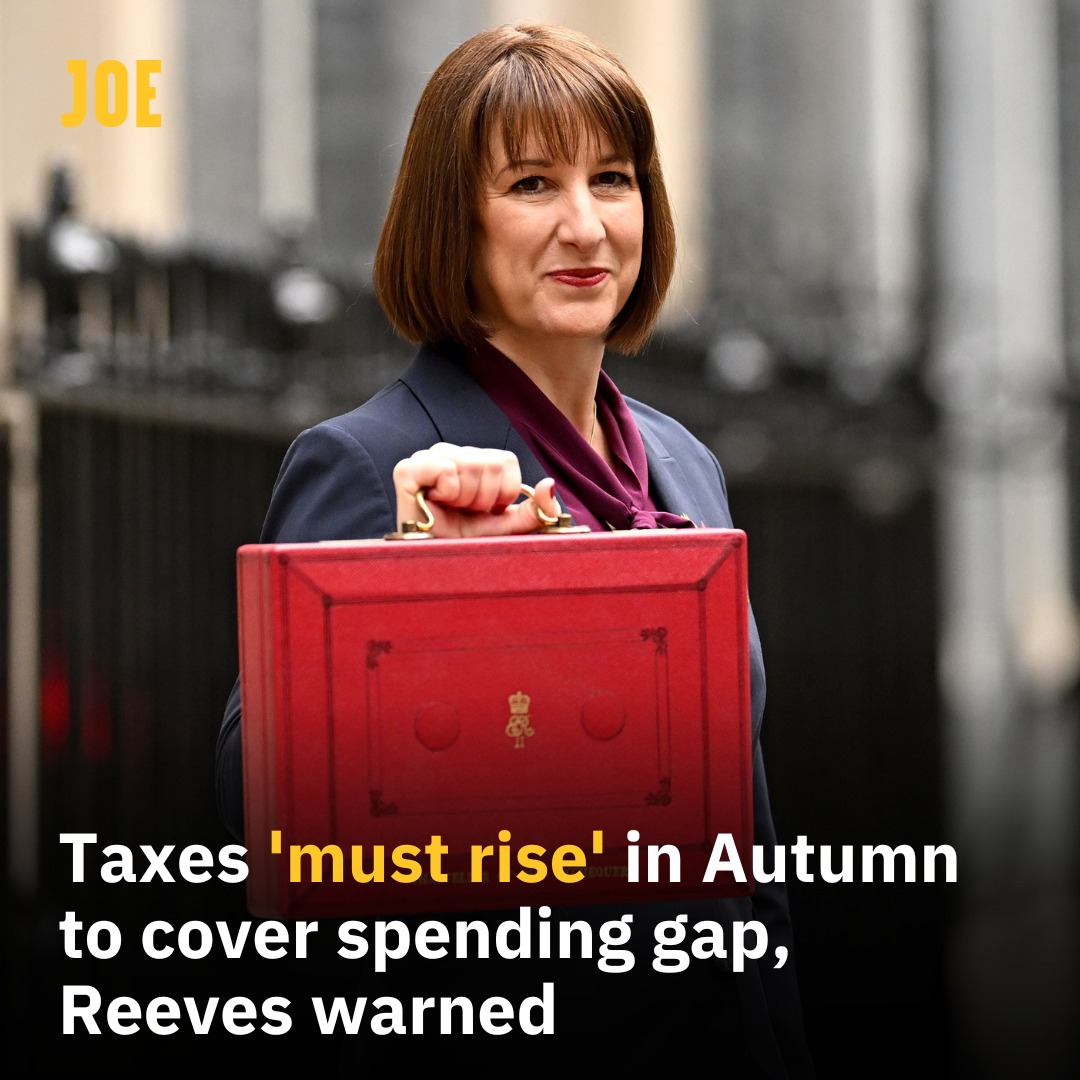
Taxes ‘must rise’ in Autumn to cover spending gap, Reeves warned
According to the National Institute of Economic and Social Research, the government is on track to miss their own target.
Taxes ‘must rise’ in Autumn to cover spending gap, think tank warned Chancellor Rachel Reeves.
According to the National Institute of Economic and Social Research (Niesr), the government is on track to miss their own target by £41.2 billion.
Niesr recommended ‘a moderate but sustained increase in taxes’ as well as reform of the council tax system to make up the shortfall.
Prime Minister Sir Keir Starmer defended how the government has handled the economy; however, he did not explicitly answer a question about whether taxes would increase in the upcoming budget.
While visiting a school in Buckinghamshire, the PM was asked whether he disagreed with Niesr’s assessment, to which he replied: “Some of the figures that are being put out are not figures that I recognise.
“In the autumn, we’ll get the full forecast and obviously set out our Budget,” he said, adding the budget would focus on living standards and “making sure that people feel better-off”.
Niesr further suggested that the government raise revenue through changes to the scope of VAT and pension allowances and prolonging the freeze in income tax thresholds further than the set date of 2028.
When she became Chancellor, Reeves set out two rules for government borrowing:
- That day-to-day spending would be paid for with government revenue, which is mainly taxes. Borrowing can only be for investment.
- That debt must be falling as a share of national income by the end of a five-year period.
She has repeatedly stated that these rules are ‘non-negotiable’.
Reeves had originally promised not to raise taxes further; however, she recently refused to rule it out due to disappointing data on economic growth.
In its manifesto, Labour vowed not to raise taxes such as VAT, income tax, or national insurance on the ‘working people’.
Speaking to the BBC, deputy director for macroeconomics at Niesr, Stephen Millard said: “If she wants to raise £40bn then I think one of the big taxes is going to have to be raised.
“If she does that then it will break the Labour promise about raising taxes on working people.”
Niesr argued that raising taxes would help build a ‘buffer’ that would reassure investors about the country’s stability of public finances.
They added that in turn, this ‘may reduce borrowing costs’ for the government.
Starmer backs the government’s handling of the economy, and said Labour has ‘stabilised the economy’ and ‘raised wages as well’.