Orca trainer is devoured by this one while perfor…
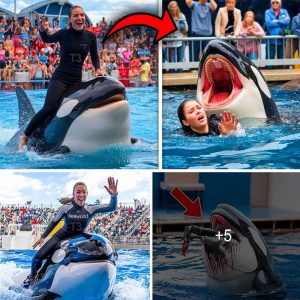
In a powerful and emotional documentary, viewers are taken inside the heartbreaking final moments of Maris Ellington — a passionate orca trainer whose deep love for marine life ended in unimaginable tragedy.
Maris, known for her strong bond with the animals she cared for, was performing a routine show with Cairo, a massive orca at Ocean World. But in a split second, everything went wrong. The trusted connection between trainer and animal shattered, and what was meant to be a joyful performance turned into a fatal encounter.
The documentary doesn’t just recount the events — it shines a light on the hidden risks of marine animal captivity and the ethical questions surrounding using wild creatures for entertainment. Maris’s death raises haunting concerns about the pressure placed on both trainers and animals in these high-stakes environments.
Her story has become a wake-up call, fueling urgent discussions about animal welfare, safety, and the cost of forcing nature into performance. Maris Ellington’s legacy now stands as a voice for change — a call to rethink how we treat the creatures we claim to admire, and a push toward more compassionate, respectful ways of interacting with the natural world.
A tragic incident occurred on December 24, 2009, when a SeaWorld orca trainer, Alexis Martinez, lost his life after a violent attack by an orca named Keto. The event took place at Loro Parque’s Orca Ocean in the Canary Islands during a routine Christmas show rehearsal. This heartbreaking accident left the trainer’s colleagues and the public shocked.
Alexis Martinez and His Work with Orcas
Alexis Martinez, at just 28 years old, was an experienced orca trainer who had worked with these majestic creatures at Loro Parque. He was involved in the daily care and training of the orcas, including Keto, a 6,600-pound male killer whale born in captivity at SeaWorld in 1995. Keto, who had spent most of his life in captivity and had never seen the ocean, was on loan to Loro Parque from SeaWorld at the time of the incident.
Martinez had expressed concerns about the orcas’ behavior leading up to the tragic event. His partner, Estefanía Luis Rodriguez, reported that he had mentioned the orcas, including Keto, were becoming more difficult to manage, displaying disobedience and signs of aggression.
The Incident and its Aftermath
The incident occurred during a routine performance rehearsal, where Martinez attempted a trick known as the “stand-on spy hop.” In this maneuver, the trainer balances on the orca as it rises out of the water. However, things went wrong when Keto, possibly due to his changing behavior, leaned to one side, positioning himself between Martinez and the stage. According to reports from other trainers, the orca seemed to intentionally block Martinez from moving.
Despite efforts to maintain control, Keto used his rostrum (the tip of his snout) to force Martinez to the bottom of the pool. The orca violently interacted with Martinez’s body, and it became clear that the situation was dire. Trainers attempted to regain control and remove Martinez from the water, but by the time they succeeded, Martinez had suffered severe injuries, including internal bleeding.
Medical Report and Consequences
The post-mortem examination confirmed the severity of the injuries. Alexis Martinez died from multiple compression fractures, internal organ damage, and bite marks inflicted by the orca. His tragic death came just months before another fatal attack by an orca, when Dawn Brancheau, a SeaWorld trainer, lost her life in a similar incident in 2010.
In the wake of the attack, SeaWorld made the decision to temporarily halt in-water interactions between trainers and orcas at three of its parks. This decision was part of an effort to reassess safety protocols and address the growing concerns surrounding the safety of trainers working with these powerful animals.
The Legacy of Alexis Martinez
Alexis Martinez’s untimely death serves as a somber reminder of the inherent risks involved in working with wild animals, even those born in captivity. His passing sparked widespread discussions about animal behavior, the ethics of keeping orcas in captivity, and the safety measures required for trainers working with these magnificent yet unpredictable creatures.
The incident also led to heightened scrutiny over orca training practices and prompted a reexamination of how zoos and aquariums can best ensure the safety of both animals and trainers. As more tragic incidents came to light, the public’s opinion on the ethics of keeping large marine mammals in captivity began to shift, resulting in changes to the industry as a whole.