The Unseen Agony: The Secret Promise, the Whispered Prayer, and the Emotional Cost of Taylor Swift’s Viral Tears
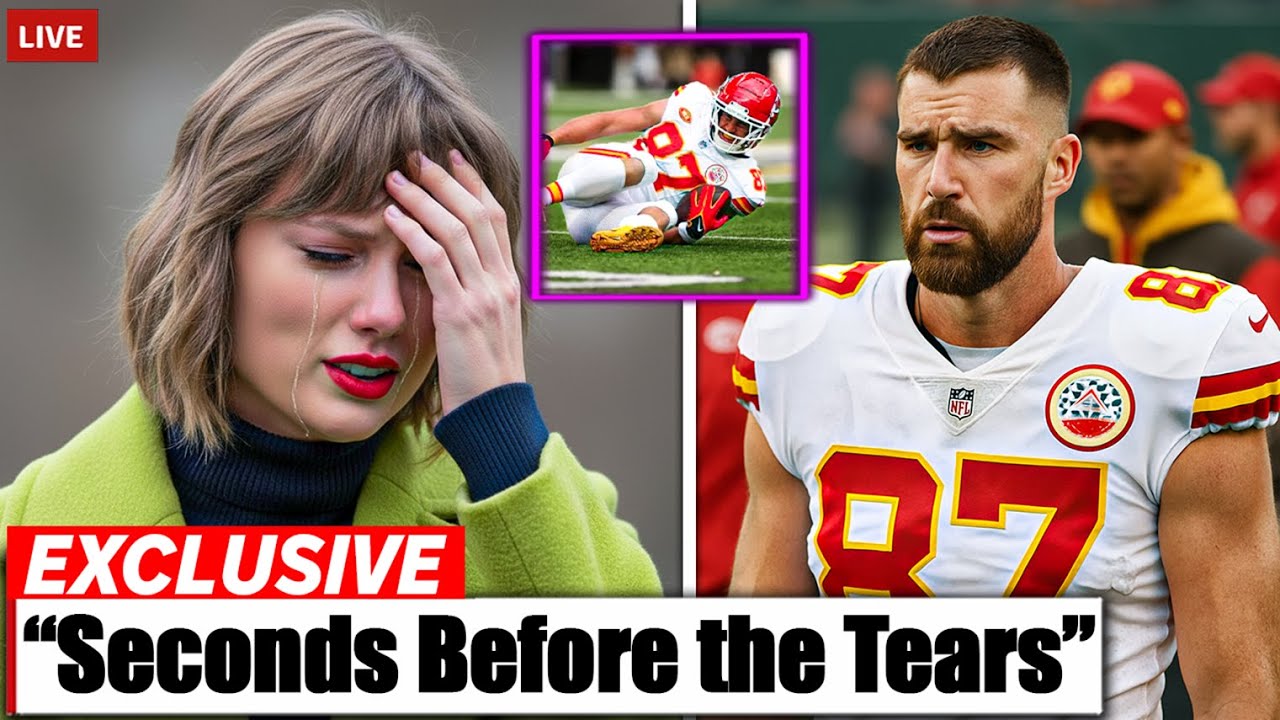
The floodlights of Highmark Stadium cut through the chilly Sunday night air, illuminating a crowd that was, as usual, electric—a wave of deafening noise and adrenaline. But in the span of a single, brutal instant during the third quarter, the noise died. The familiar, suffocating silence of a stadium in shock descended, signaling that something was terribly, profoundly wrong.
The Kansas City Chiefs were trailing by a single touchdown when Patrick Mahomes dropped back, searching for his most trusted target, number 87. Travis Kelce, operating on muscle memory, secured the ball and spun into the open field. Then came the impact—a blindside hit, hard and low, twisting his arm at an unnatural angle. He crumpled to the turf, and for a split second, the world seemed to hold its breath. The only sound left for those close enough to hear was his scream of pain.
The cameras, which feed the world’s hunger for spectacle, immediately zoomed in. The focus shifted from the agony on the field to the anguish in the VIP suite. There, framed in lime green, stood Taylor Swift, frozen. Her hand was pressed over her mouth, her eyes glistening. Then, she broke. Tears streamed down her face as she watched the man she loved clutch his arm, unable to stand.
That split-screen image—him writhing in pain, her weeping helplessly—became the immediate, global headline. It circled the world before the game was even over, a potent, visceral symbol of celebrity heartbreak. Yet, as sensational as that moment was, it only captured the end of Taylor’s private, terrifying ordeal. The broadcast missed the real story, the quiet shift inside that suite that occurred seconds before those famous tears fell, revealing the depth of a commitment forged long before the cheers and the chaos.
The Instinctive Terror
When the hit happened, nearly every eye in the stadium and every lens on the sideline was fixed on Kelce’s collision with the turf. But Taylor had seen it coming. From her vantage point behind the glass, she had been locked onto his every move, meticulously tracking the rhythm, the planting of his foot, the lowering of his shoulder—the familiar choreography of his dangerous profession. This time, she sensed the danger before anyone else did.
She gasped just a heartbeat before the crowd realized the gravity of the situation, before the commentary fell silent. It wasn’t a reaction to a replay, but to raw, pre-emptive fear. As Patrick Mahomes knelt beside his teammate and the medical team stormed the field, Taylor leaned forward, her eyes glued to the scene. Her hand rose to her chest, her nails digging into her cardigan, a desperate, physical attempt to hold herself together.
What the microphones and the broadcast cameras didn’t capture was the moment she whispered his name under her breath, not once but twice: “Trav, please.” A witness seated nearby confirmed it was a prayer born not of Hollywood drama, but of instinct. To the world, this was a pop queen reacting to a game-day setback; but to her, it was the visceral fear of watching the man she loved in excruciating pain, confronting a danger she had promised herself she’d never get used to.
This terror was not new. It was a pattern of joy followed by a flash of dread, an inherent cost of the life they now shared. It spoke to a history, a memory buried deep beneath the roaring of the crowds.
The Promise Built on Collisions
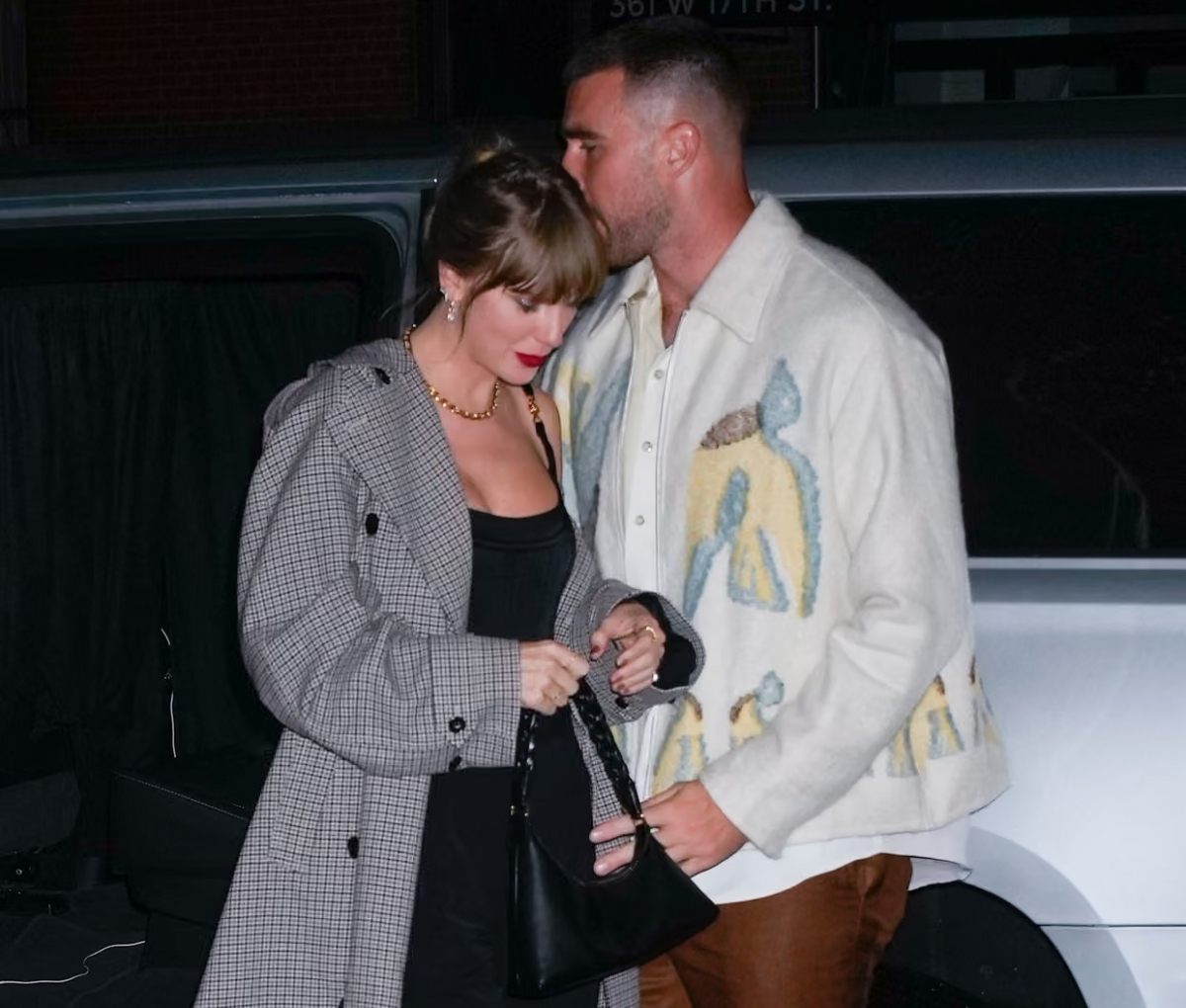
The foundation of their relationship, often reduced to friendship bracelets and stadium kisses by the tabloids, was built on a quiet understanding of shared vulnerability, long before viral fame turned them into the world’s most scrutinized couple. It started with a simple text, late-night calls, and conversations about fear, risk, and what it truly means to show up for someone whose career demands that they repeatedly put their body in harm’s way.

Kelce, with his characteristic blend of humor and truth, once told her, “My job is to take hits, yours is to take headlines.” It was a joke with a profound truth hiding inside. Their mutual respect was sealed by a silent, powerful promise: He would always play with heart, and she would always be there, no matter how tough the season got.
Game days evolved into their ritual—her red lipstick for luck, his listening to her music in the locker room. When he looked up at the stands, she was always there. But rituals cannot protect you from reality, and on that Sunday night, the reality was brutally simple: no amount of love, fame, or cheering can stop a body from breaking.
The next few minutes on that field, captured in agonizing slow motion, would haunt her far longer than any fictional heartbreak she’d ever written a song about. As Kelce’s body twisted mid-air from the two-man hit—one high, one low—and his elbow snapped back in a way no arm should, the entire world held its breath. When he hit the turf, he didn’t move for a second, mouth open, eyes shut tight, pain radiating through the stadium’s suddenly silent air.
The Longest Ten Minutes in the Glass Suite
For Taylor, the agonizing loss of control was the real heartbreak. She was rooted to the floor of her glass suite, pressing her palms against the window as if she could somehow will him back onto his feet. Her friends tried to soothe her, urging her to breathe, but she couldn’t. Not until the medical cart pulled up, and Travis was helped off the field, disappearing down the tunnel.
Up in that glass box, time seemed to stop. Phones buzzed, cameras flashed from below, and she knew every gesture was being dissected in real time. Yet, in that moment, she didn’t care about the optics. Panic clawed its way up her throat. Her fingers trembled as she struggled to check her phone for an update that wasn’t coming.
“Should I go down there?” she whispered, her desperation rising. Her friends—Britney Mahomes among them—told her no. It would cause chaos, generate headlines, and pull focus from the team. So she stayed, living through what one insider described as the longest ten minutes of her life. She didn’t blink until a substitute took Kelce’s place on the sideline, the final, dreadful confirmation that he wasn’t coming back.
She whispered his name one more time, softer, almost like a prayer, before finally turning away from the field, unable to watch another play. To everyone else, the game went on; to Taylor, it had ended the second he left. It was a harsh, undeniable reminder of what it truly costs to love a man who steps into a weekly battle. It requires a different kind of courage—the kind that accepts that heartbreak isn’t a possibility, it’s an inevitability.
The Walk of Defiance in the Tunnel
Meanwhile, deep inside the cold, muffled quiet of the tunnel, the true aftermath of the tackle was unfolding. Kelce sat on a bench, his jersey torn, sweat mingling with pain. The team doctor’s diagnosis was swift and certain: “You’re done for the night.” Six words that hit him harder than the tackle itself, forcing him to leave a part of himself behind on the field.
Looking up at a small monitor showing the live feed, he saw it: the shot of Taylor in the stands, her face streaked with tears. He saw her pain, her fear, and her composure as she wiped the tears away. And that single, fleeting second was enough.
It was enough to make him breathe out, lean back, and whisper, “I’m fine,” even though he wasn’t. When a staff member offered him the cart, he shook his head. “I’ll walk,” he insisted. And he did. Step by step, he walked through that tunnel, pain in every stride, but pride in every breath.
His decision wasn’t for the cameras or the press. It was for her. It was a silent, powerful message—a return of the promise. If she could stand there in that glass box, holding herself together for him, the least he could do was walk, no matter the agony. When his figure reappeared at the far end of the tunnel, lit by fluorescent light, the crowd erupted again, not for a touchdown, but for resilience. For Taylor, watching from above, her breath hitched. He was walking. That was enough for now.
The Quiet After the Storm
As the game ended and the field lights dimmed, the real battle raged online. Clips of Taylor crying replayed endlessly. Pundits speculated on distractions and debated if she was a “jinx.” The human truth of the moment was buried under hashtags and headlines.
Yet, miles above the deafening noise, both Taylor and Travis made the same choice: silence. No statements, no tweets, no explanations. It was their rarest form of peace, a shared protective instinct. Later that night, in her car leaving the stadium, Taylor stared out the window, replaying the hit, the fall, and the silence. Her phone buzzed again. The message, from “trav,” was simple: “I’m okay.”
She stared at the text, the relief complicated, knowing “okay” doesn’t mean “safe” in their world. But she smiled—a small, tired smile of gratitude. She posted nothing. Meanwhile, Travis, back in Kansas City, scrolled through the clips of the game. He paused on the zoomed-in photo of her in the stands, tears in her eyes, watching him limp away. He saved it. It was their moment, not the internet’s, not the NFL’s.
That moment, the raw, shared truth of fear and devotion, is what keeps their story alive. It’s the small, quiet proof that behind every headline, there is still a heartbeat. Their love story isn’t built on rehearsed fairy tales; it’s built on faith and acceptance—the kind you can’t control or fake. The cameras caught the fall and the tears, but the real story lives in what came after, when the lights went out, the crowds went home, and all that was left was the powerful, messy, and painfully human truth of two people who love each other enough to weather the inevitable storms.